Articles for tag: analysiscanadaclassicalcriticshistoryimprovisationjazzjournalmagazinemontrealmusicnewsnewspaperreview

When Two Musical Worlds Clash and Create Something New

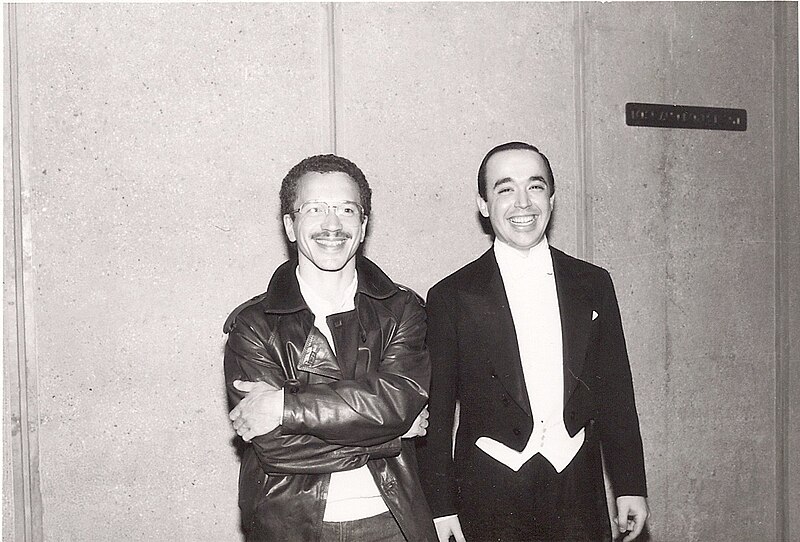
There’s a particular kind of magic that happens when a jazz musician finally understands that Bach was improvising all along. On Tuesday evening, December 02 2025, at Studio TD, pianist Paul Lay and his trio—Clemens van der Feen on double bass and Donald Kontomanou on drums—didn’t just perform Bach through a jazz lens. They made the case that these are actually the same thing. The Festival International Bach Montréal‘s decision to program a jazz trio might have seemed unconventional, yet it paid off. By trusting that Bach’s music could sustain multiple approaches, the festival acknowledged something essential: that tradition remains
Orliński Returns to Montreal: Redefining the Countertenor

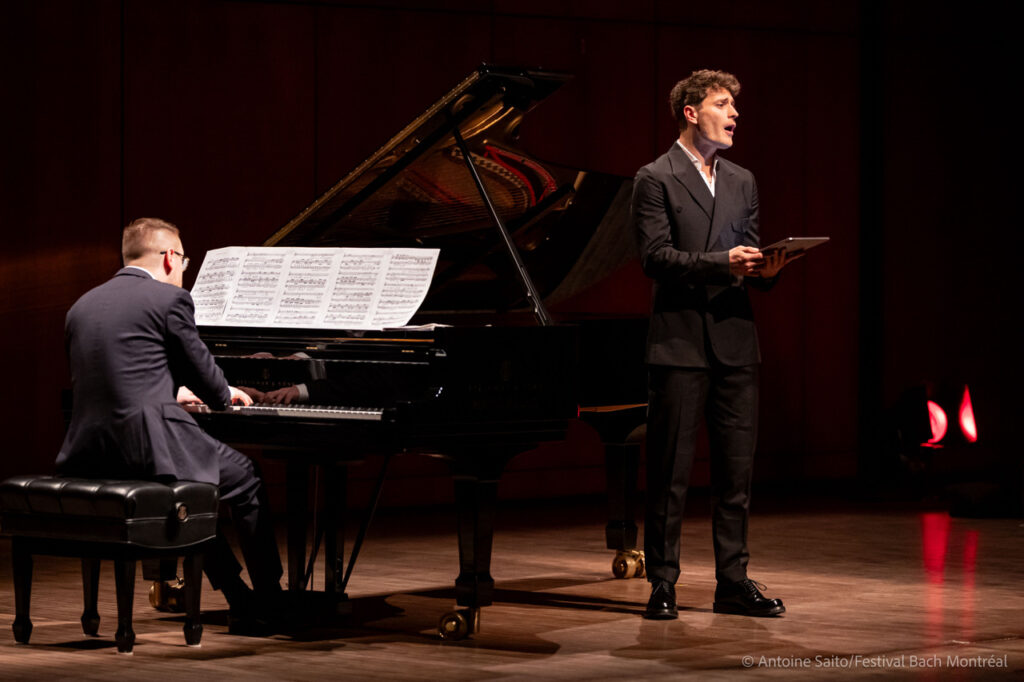
There was an unmistakable sense of anticipation in Salle Pierre-Mercure on Monday evening as Jakub Józef Orliński took the stage alongside pianist Michał Biel at the early dates of the Festival International Bach Montreal 2025. Seven years had passed since the Polish countertenor’s first Montreal appearance in 2018—a performance that had left audiences mesmerized at the Church of Andrew and St. Paul. Yet the artist returning to us this November was not simply repeating past glories. Instead, Orliński presented something more ambitious: a recital designed to dismantle, once and for all, the narrow expectations placed on the countertenor voice. The

December 28, 2024

Editorial Team

Festival Bach Montréal 2024: Highlights, Surprises, and Reflections

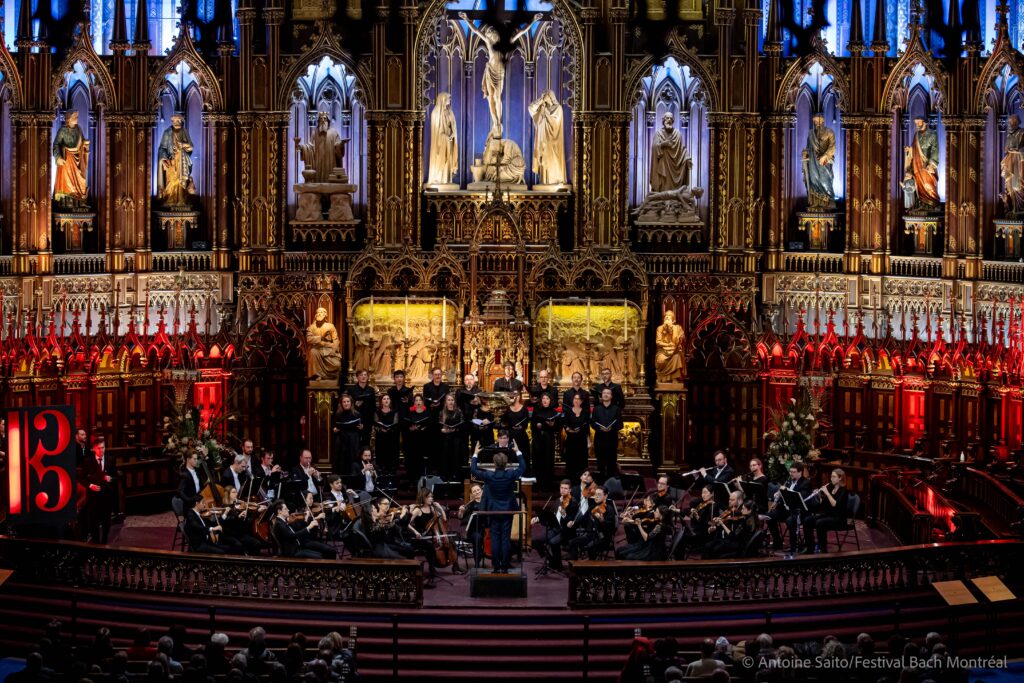
When the Festival Bach Montréal 2024 concluded this December, it left behind a tapestry of sounds and experiences as intricately woven as the composer’s most elaborate fugues. For nearly a month, the city— and indeed beyond stretching to Québec and Ottawa—reverberated with the legacy of Johann Sebastian Bach, reimagined through a rich program that mixed time-honored traditions with contemporary approaches. This year’s edition offered a remarkable journey that began with open-armed accessibility and culminated in moments of shimmering grandeur. The festival, which has become a touchstone for Bach aficionados in North America since its modest six-day inception in 2005, has

Jazz and Classical Music Fusion – Exploring the Harmony

The worlds of jazz and classical music, though seemingly distinct, have intersected in remarkable ways throughout history. While classical music is often associated with structured compositions and centuries-old traditions, jazz is celebrated for its spontaneity, improvisation, and vibrant energy. Yet, these two genres have not only coexisted but have also influenced and enriched each other in profound ways. This article explores the fascinating intersection of jazz and classical music, tracing the roots of both genres, their early interactions, and the innovative fusion that continues to shape modern music. The Roots of Jazz and Classical Music Classical Music’s Foundations Classical music,

Rediscovering Ancient Music: From Gregorian Chants to Renaissance Polyphony

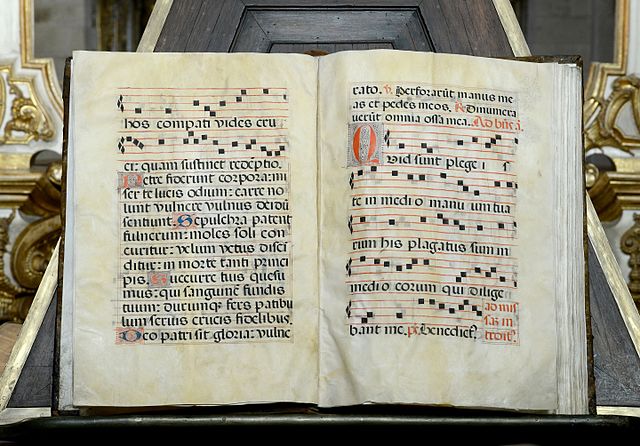
Music is often regarded as a universal language, a powerful medium that transcends time, space, and culture. In the rich tapestry of Western music, the roots run deep, tracing back to the sacred halls of medieval monasteries and the grand cathedrals of the Renaissance. The journey from the austere beauty of Gregorian Chants to the intricate harmonies of Renaissance Polyphony is not merely a progression in musical complexity but a reflection of profound shifts in religious, cultural, and artistic paradigms. This article delves into this fascinating transformation, uncovering the essence of ancient music and its lasting influence on the Western

Rethinking Classical Music Education for the 21st Century

Grace Kang, Royal College of Music, February 15, 2015 Classical music education has long been rooted in centuries-old traditions, emphasizing the works of composers like Bach, Mozart, and Beethoven. While these foundations are undoubtedly essential, the 21st century presents unique challenges and opportunities that call for a reevaluation of how we approach teaching classical music. In an era defined by rapid technological advancements, cultural shifts, and diverse musical landscapes, it is crucial to rethink classical music education to make it more relevant, inclusive, and accessible. Embracing Technology and Creativity in Music Education Technology has revolutionized nearly every aspect of our

How the Romantic Era Revolutionized Classical Music and Art

The Romantic Era, spanning from the late 18th to the early 19th century, was a period of profound transformation in the world of classical music and art. This article delves into the key characteristics, influential figures, and lasting impact of the Romantic movement, which sought to express deep emotion, individualism, and the sublime in its works. Origins and Characteristics of the Romantic Era The Romantic Era emerged as a reaction against the rationality and order of the Enlightenment and the Classical period that preceded it. Artists and composers of the Romantic period sought to break free from the constraints of

The Key Traits of Baroque Music and its Composers

The Baroque period, spanning from approximately 1600 to 1750, was a time of dramatic innovation and creative flourishing in Western classical music. Characterized by its ornate style, emotional expressiveness, and technical virtuosity, Baroque music laid the foundation for many musical forms and conventions that followed. This article explores the key characteristics of Baroque music and highlights some of the most influential composers of the era. Characteristics of Baroque Music Baroque music is distinct for its stylistic and structural features, which reflect the period’s broader cultural and artistic trends. Some of the defining characteristics include: 1. Ornamentation: Baroque music is known

Exploring the Forms of Sonatas, Symphonies, and Concertos

Classical music encompasses a wide variety of forms and structures, each with its own unique characteristics and historical development. Among the most important and enduring forms are the sonata, symphony, and concerto. This article delves into these three forms, exploring their origins, key features, and notable examples. The Sonata: A Journey Through Musical Form The sonata is one of the most fundamental forms in Western classical music, serving as a blueprint for many compositions from the Baroque period to the present day. The term “sonata” derives from the Italian word “sonare,” meaning “to sound,” and originally referred to a piece