
There’s a particular kind of magic that happens when a jazz musician finally understands that Bach was improvising all along. On Tuesday evening, December 02 2025, at Studio TD, pianist Paul Lay and his trio—Clemens van der Feen on double bass and Donald Kontomanou on drums—didn’t just perform Bach through a jazz lens. They made the case that these are actually the same thing.
The Festival International Bach Montréal‘s decision to program a jazz trio might have seemed unconventional, yet it paid off. By trusting that Bach’s music could sustain multiple approaches, the festival acknowledged something essential: that tradition remains alive precisely when it’s willing to be reinterpreted and claimed by artists working in different languages. The packed Studio TD suggested the audience agreed.
The evening revealed something unexpected right from the start. The audience came prepared for classical music etiquette—attentive silence, respectful distance. But a jazz trio needs different air to breathe. Applause between movements, interjections, the permission to respond. Lay noticed this immediately. Rather than fight it, he used it. Those silences became part of the architecture of what he was building. The trio learned to play into that restraint, making each phrase land harder in the quiet.
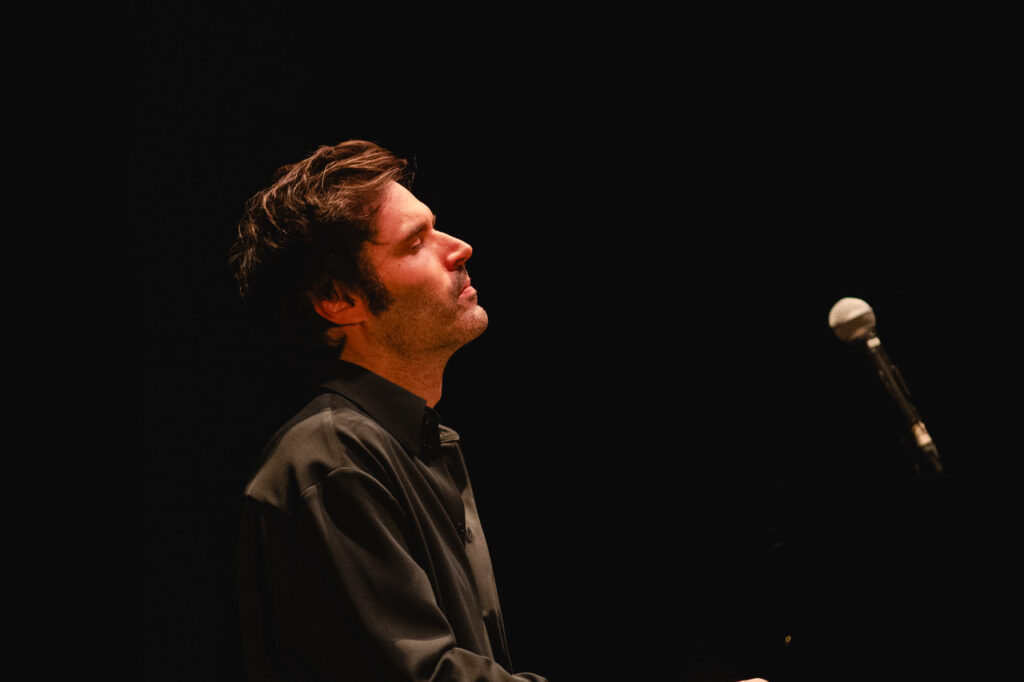
Paul Lay is among France’s most acclaimed jazz pianists, winner of the Martial Solal Prize, the Montreux Jazz Competition, the Charles Cros Academy Prize, and the Django Reinhardt Prize.
The Weight of Expectation
There’s a long tradition of jazz pianists claiming Bach—Jarrett, Peterson, Loussier. Each of them brought something different. Lay’s contribution isn’t to prove that Bach swings (we know this already) or that Bach was somehow a proto-jazz composer (he wasn’t). Instead, what emerged across the evening was a pianist working through what it means to inhabit two musical languages simultaneously without privileging one over the other.
His touch on the keyboard was immaculate but never cold. The Preludes and Fugues came across not as material to be reinterpreted but as scores he’d internalized so thoroughly that his own voice was already embedded in them. Van der Feen’s bass lines had real melodic weight—they didn’t shadow Lay so much as push against him, creating friction in the best sense. Kontomanou was searching, sometimes finding unstable ground, which made the moments of clarity more striking.
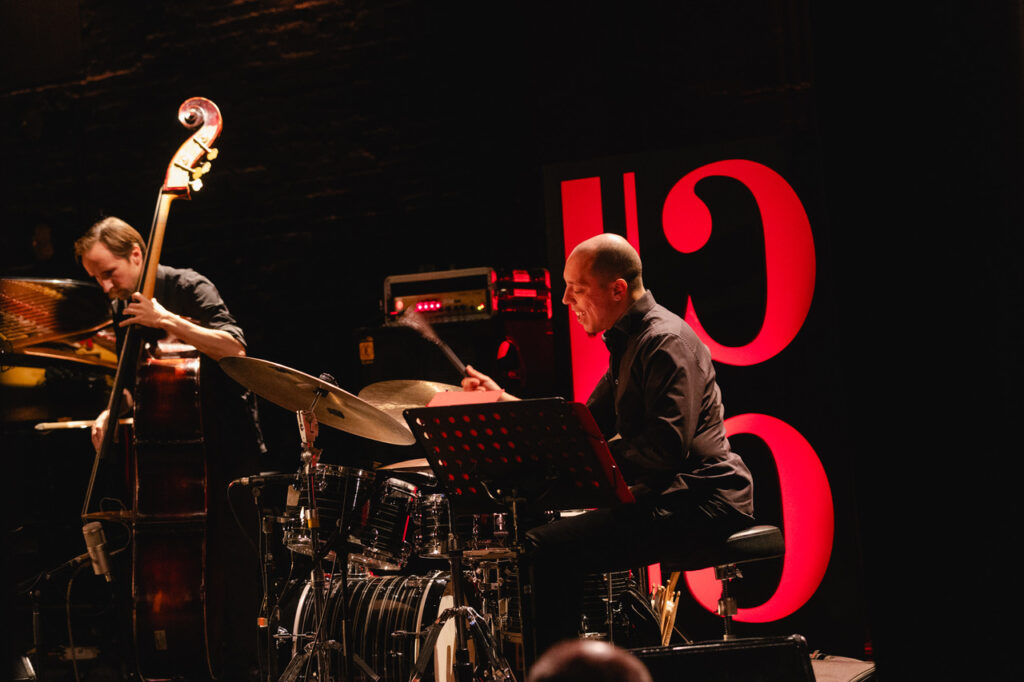
Peterson’s Bach Suite was the evening’s centerpiece, a reminder that this kind of work has roots. Lay handled it with something approaching reverence, though the real revelation came when he turned to his own compositions—“Eole,” “Blues for Anna Magdalena,” and “Retour à Ithaque”—pieces that suggested he was asking a different question than Peterson did. Where Peterson wondered “what can jazz do with Bach?”, Lay seemed to be asking “what happens if we stop separating them?”
What Emerges
What distinguishes Lay from his predecessors might be his comfort with uncertainty. Loussier knew exactly what he was doing—making Bach swing, and doing it beautifully. Jarrett was on a spiritual quest. Peterson was proving elegance was possible. Lay seemed less certain of the destination, more interested in the process of discovery and working with the different dynamics of the audience.
There’s something valuable in watching a musician navigate two traditions without pretending the tension between them doesn’t exist. Lay didn’t dissolve the boundary between jazz and classical—he learned to work within it, finding pockets of freedom on both sides. The evening suggested these languages have more in common than marketing departments like to admit, but also that they remain fundamentally different approaches to sound.
By the final pieces, the trio had found something worth listening for: not a fusion of styles but a musician confident enough to let both coexist without resolution.