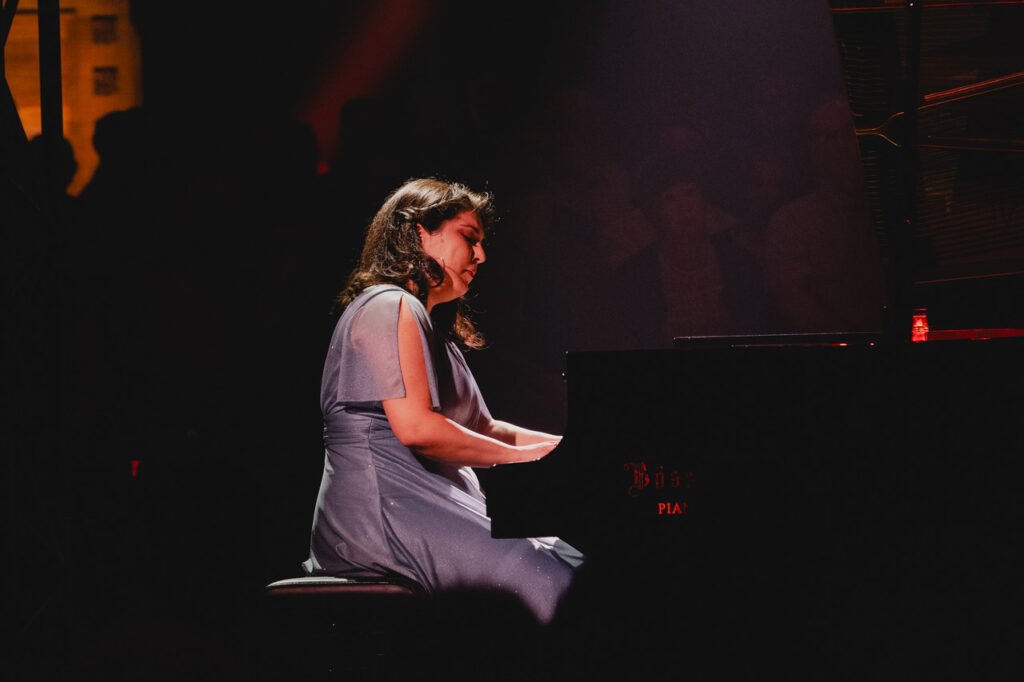
Schaghajegh Nosrati returns to Montreal for the festival’s 20th anniversary season, following her performance of Bach’s Six Partitas during last year’s 19th edition. This time, she brings the Goldberg Variations, a work her mentor, András Schiff, performed at the Maison symphonique as part of the same festival’s 2022 edition. Nosrati has long embodied the kind of artist this festival was created to celebrate: one for whom Bach is not a subject of historical inquiry, but a living musical language, approached with both scholarly depth and genuine artistic daring.
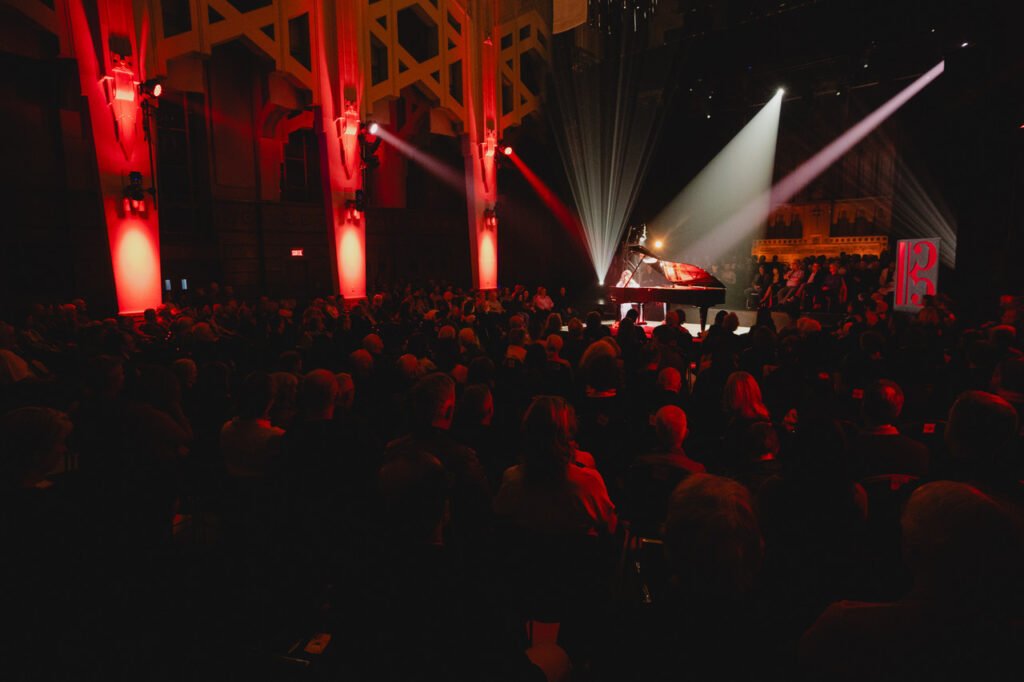
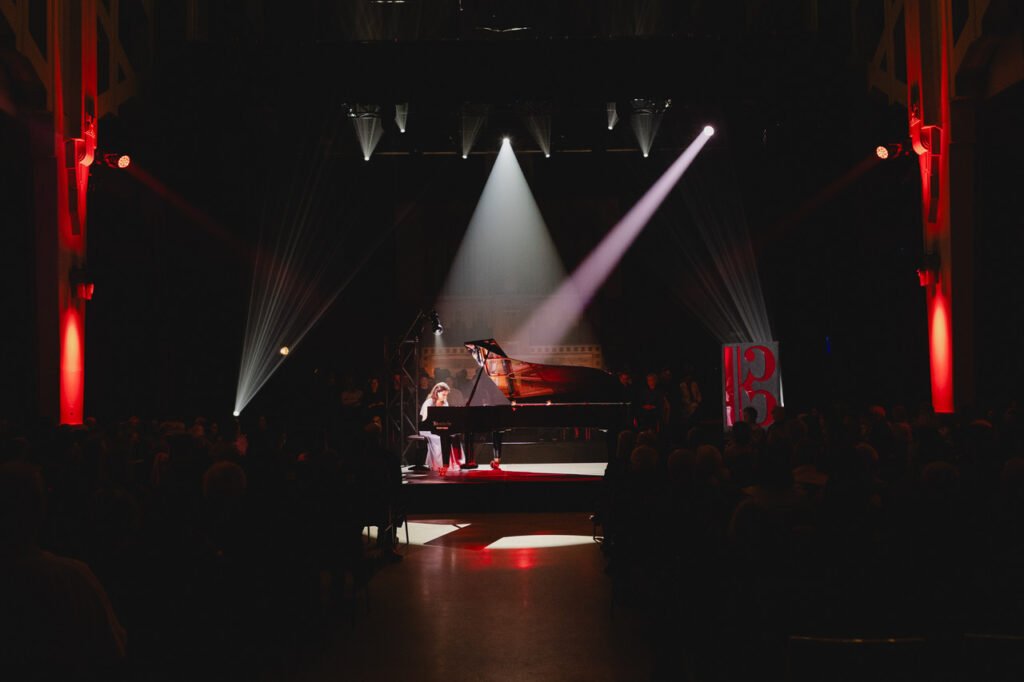
Théâtre Paradoxe was full, and the crowd looked like a working audience: musicians, aficionados, listeners who know this music well. The building on Monk Boulevard was once a church, acquired from the diocese and run since 2014 by Groupe Paradoxe, a social economy organization that trains young adults for technical jobs in the performing arts. The church is still there in the shape of the room. The setup was simple: a Bösendorfer in the middle of the stage for a Bösendorfer artist, one light directly above it and two more angled in from further back, so that the piano and the pianist were the only things to look at. Before the concert, the organizers reflected briefly on the festival’s 20th anniversary and warmly encouraged everyone to turn to the person beside them and share a few words, a lovely way to bring the audience together.
The Aria was slow and bare, with no sense of a prelude. She let the melody unfold without hurry over a bass line that moved with its own breathing. As expected, she hardly used the sustain pedal, and when she did it was in short touches, just enough to give a note weight before cutting it off. One side of her keeps a strict, almost metronomic pulse, the side that comes from forefathers. The other side wants to stretch a phrase, colour it, try something. At this point in her career she clearly knows what she can control, and she keeps fighting on both fronts.
Nosrati also likes to unsettle the listener. A cadence arrives a fraction late, an ornament is held back, a line seems about to falter and then resolves exactly where it should. These hesitations are calculated, and in a work whose main danger is predictability, they keep the ear alert. The one accident came in Variation 14, whose hand crossings smudged for a few bars before she recovered without any fuss.
The Canon at the Fifth, in G minor, closes the first half of the cycle, and she let a long well deserved silence settle after it. She resettled at the keyboard, the room held still with her, and the dotted rhythms came in with a new sense of purpose, as if the work were starting again.
From there the dances carried the evening. Variation 20 had passion and rhythmic bite, and in that resonant hall you could hear her feet moving under the piano, which made the performance feel strangely close, almost like watching a dancer. The Canon at the Seventh that follows went back to a more literal reading of the score, at a steady walking pace, but the tension between her two sides did not disappear.
The pastoral 9/8 of Variation 24 is where her approach made the most sense. The pulse is firm and unbending, yet over it she builds something more pictorial, closer to a scene than an exercise. Variation 28, with its long chains of trills, was clean and lively, the hands trading phrases like question and answer, the dynamics carefully graded. In the bravura chords of Variation 29 she rocked from side to side, choosing her weight well and striking with real dexterity.
In the opening Aria she ornamented in the usual way, with turns and fioriture around the melody, and she kept doing this in the repeats throughout the variations, with taste and plenty of invention. At the return of the Aria when closing, she stripped all of that away. The ornaments we had come to expect simply did not arrive, and the melody was left bare and more inward. It was a quiet gesture, carefully measured, and it changed how the whole cycle read in hindsight. Babayan had framed his recital with this same Aria last year. Here the idea went back to its original setting, inside the Goldberg Variations themselves.
She seemed to want to stay in that last note a little longer, but the audience started clapping before she had let it go. After the long silences they had kept with her all evening, they were too eager to hold one more.