The final revealed different musical priorities from three violinists at different stages
The grand final of the Concours Musical International de Montréal on June 4th took place at the Maison symphonique with invited conductor Sascha Goetzel leading the Orchestre symphonique de Montréal. Three violinists competed in the final round, each having navigated a rigorous selection process from an initial pool of 250 applicants. The competition itself had already produced surprises. Bade Dastan, the Turkish-Belgian finalist, had delivered what many heard as the most convincing Mozart performance during the semi-finals the night before, yet she did not advance to the grand final. The jury, chaired by Montreal-born Lucie Robert and comprising leading teachers and performers from across the violin world, had made its selections. What remained was to hear how each finalist would perform a major concerto with orchestra.
Koshiro Takeuchi opened with Tchaikovsky’s Violin Concerto. The 21-year-old Japanese student from the Manhattan School of Music brought considerable technical assurance to the work. From the opening measures, a particular approach was evident: metronomic, precisely articulated, controlled. His bow work throughout was flawless, with staccatos sharp and legato passages cleanly shaped.
When the orchestra dropped away for his cadenza, the performance shifted noticeably. Without the ensemble to navigate, Takeuchi found genuine ease and musicality. The cadenza had shape and breathing, real forward momentum. It suggested that this violinist’s particular gifts emerge most clearly in moments where technical control is paramount. Once the orchestra re-entered, the playing settled back into its measured approach.
Sara Watanabe, from Japan, played Bartók’s Second Concerto. Her approach to the work differed fundamentally from Takeuchi’s. Bartók’s modernist language can become merely a technical obstacle for performers. Watanabe moved through it as music. Her strings carried warmth and presence. In the virtuosic passages of the second movement, she navigated the technical complexity with clear authority, pulling the orchestra into her vision of the work rather than simply executing what the score demanded. She had also won the Mozart Prize for her semi-final performance.
Laurel Gagnon, 31, arrived at her Brahms Concerto having demonstrated throughout the competition a particular quality: a willingness to commit emotionally to what she was playing. A technical issue appeared early in the first movement when the bow hair began to fray under the intensity of her playing. What followed was notable for its sheer commitment: she performed with considerable power and presence, engaging the music without hesitation or apology.
What the Evening Revealed
The jury awarded first prize to Takeuchi. Technical mastery and consistency clearly mattered to them. Yet the evening raised a familiar question in classical music: what exactly are competitions identifying? Takeuchi plays beautifully, with particular gift for moments when the orchestra steps back. But Watanabe’s interpretation of one of the 20th century’s most demanding concertos, played with vision and engagement, went unrewarded in favor of technicality and consistency.
Gagnon, meanwhile, offered something different entirely: a musician willing to risk vulnerability on stage, to commit to what she was playing even when technique faltered. In a concert hall a year from now, you’d likely still find her interesting to hear, precisely because she brings something beyond technical assurance.
The results stand. Takeuchi receives CAD30,000 plus CAD40,000 in career development, along with a three-year loan of a 1728-30 Guarneri ‘del Gesù’ violin. Watanabe placed second with the Mozart Prize. Gagnon placed third with special prizes for Canadian works and sonata performance. The audience prize went to Bade Dastan.
If the evening revealed anything, it was the extraordinary depth of talent on display. The competition succeeded not only in identifying prize winners but in introducing audiences to several young artists whose careers will be worth following closely in the years ahead. Just as impressive was the contribution of the orchestra, which met three very different concerto programs with flexibility. Whether or not one agreed with the final rankings, the evening offered a compelling showcase of emerging musicianship and a reminder of the important role competitions can play in bringing exceptional young artists to public attention.
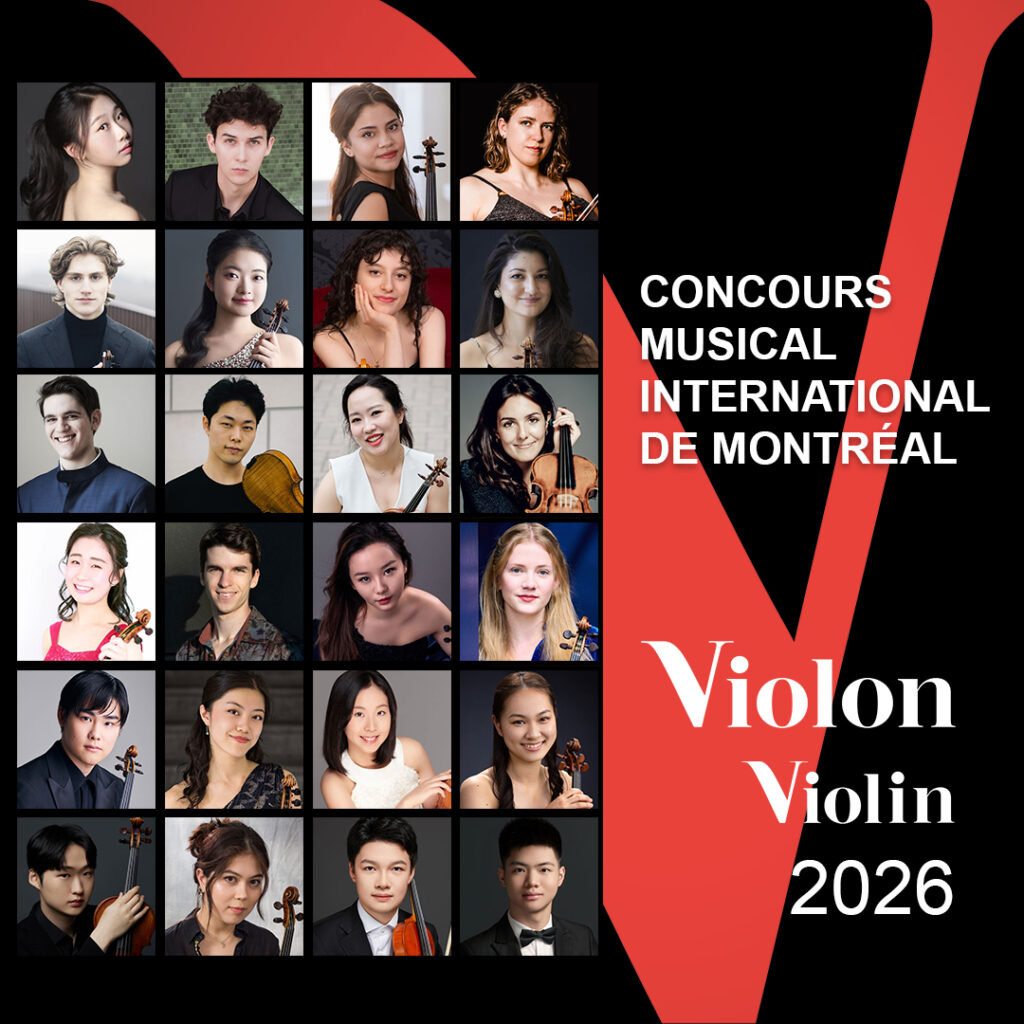
The 2026 CMIM Violin Competition drew over 250 applicants from around the world. Twenty-four violinists competed in the live first round, ten advancing to semi-finals, and five to the grand final. The competition will return in 2027 for piano.